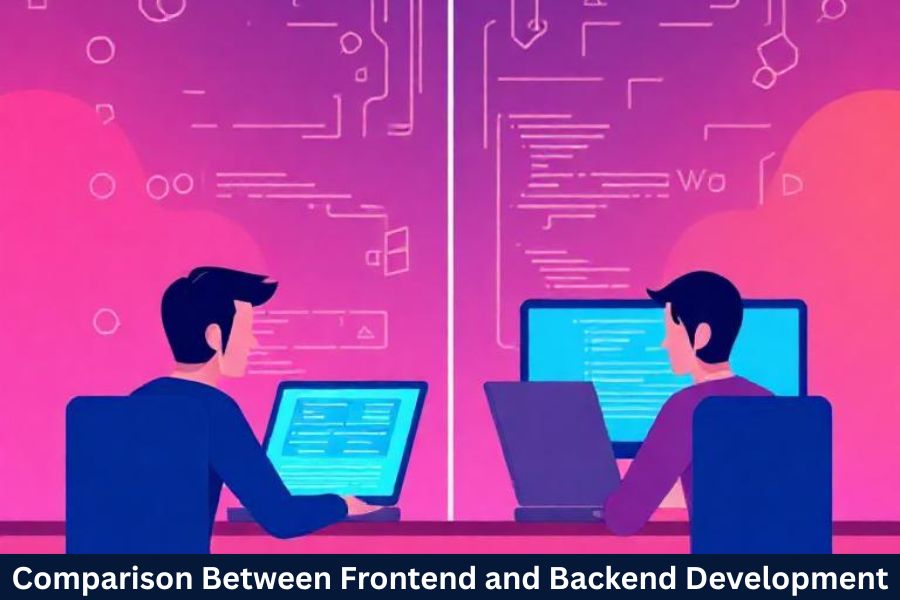
If you’ve ever wondered what makes a website run smoothly—from its looks to its functionality—you’re essentially thinking about frontend and backend development. These two worlds work hand-in-hand to bring digital experiences to life. But what exactly is the difference between them? And which one should you learn? Let’s break it down in the simplest way possible.
Why Understanding Both Sides of Web Development Matters
Whether you’re starting your coding journey or planning a career change, knowing the difference between frontend and backend development helps you decide the right path.
The Growing Importance of Full-Stack Skills
Many companies now prefer developers who understand both sides because it improves collaboration and productivity.
How Frontend and Backend Work Together
Think of a website like a restaurant:
- Frontend is the dining area (what users see).
- Backend is the kitchen (where everything gets prepared).
Both must work in harmony for the perfect experience.
What Is Frontend Development?
Definition and Core Purpose
Frontend development focuses on what users see and interact with. Everything on your screen—from buttons to animations—is frontend work.
Technologies Used
HTML
The backbone that structures the webpage.
CSS
Styles the webpage—colors, layout, fonts, spacing.
JavaScript
Adds interactivity and logic to frontend features.
Popular Frontend Frameworks
React
A fast, component-based library created by Meta.
Vue.js
Beginner-friendly and flexible.
Angular
A powerful, full-featured framework developed by Google.
Frontend Developer Responsibilities
- Building layouts and interfaces
- Ensuring mobile responsiveness
- Improving user experience (UX)
- Working with APIs
- Optimizing website speed
What Is Backend Development?
Definition and Core Purpose
Backend development is the engine behind a website. It manages data, handles logic, processes requests, and ensures everything works smoothly on the server.
Technologies Used
Node.js
JavaScript on the server.
Python (Django/Flask)
Simple, powerful, and developer-friendly.
PHP
Widely used for WordPress and large-scale apps.
Java
Popular for enterprise and banking systems.
Databases (SQL/NoSQL)
Where all the website’s data is stored.
Popular Backend Frameworks
- Django
- Express.js
- Laravel
- Spring Boot
Backend Developer Responsibilities
- Managing servers
- Building APIs
- Handling data storage
- Ensuring security
- Optimizing performance
Key Differences Between Frontend and Backend Development
Visual vs Functional Focus
Frontend is about visuals and interactions.
Backend is about logic, data, and performance.
Client-Side vs Server-Side
Frontend runs on the user’s browser.
Backend runs on the server.
Tools and Technologies
Frontend uses HTML, CSS, JS.
Backend uses languages like Python, Java, PHP, Node.js.
Type of Skills Required
Frontend: creativity, design sense, UX knowledge.
Backend: logical thinking, security, database expertise.
Performance Focus
Frontend optimizes loading time and visuals.
Backend ensures fast data processing.
Security Elements
Backend developers must secure data and requests.
Frontend handles only minimal security measures.
Testing Differences
Frontend tests visuals and user experience.
Backend tests functionality and data accuracy.
How Frontend and Backend Work Together
APIs as the Bridge
The backend provides data through APIs.
The frontend fetches and displays it.
Data Flow in Web Applications
User clicks → frontend sends request → backend replies with data → frontend displays it.
Ensuring a Seamless User Experience
Both sides must be optimized for speed, clarity, and reliability.
Career Paths in Frontend vs Backend
Which One Is Easier to Learn?
Frontend feels easier at first, but mastering it takes time.
Backend requires strong logical thinking and consistency.
Job Opportunities
Both fields offer excellent opportunities across industries.
Salary Trends
Both frontend and backend developers earn competitive salaries worldwide.
When to Choose Which Path
- Love design? Choose frontend.
- Enjoy logic and data? Choose backend.
- Want versatility? Go full-stack.
Full-Stack Development: The Best of Both Worlds
What Is Full-Stack?
A full-stack developer works on both frontend and backend.
Advantages of Being Full-Stack
- Higher salary opportunities
- Flexibility
- Better problem-solving
Challenges of Being Full-Stack
Keeping up with both fields can be overwhelming.
Real-Life Examples
Frontend Example: Building a User Interface
Designing login forms, dashboards, menus, animations.
Backend Example: Server Handling Login Requests
Validating user details, checking databases, sending responses.
How They Connect in a Real Application
Frontend → “Login Request” → Backend → “Response: Success/Fail” → Frontend updates UI.
Common Myths About Frontend and Backend Development
Myth 1 – Frontend Is Easier
Modern frontend is complex due to frameworks and UX requirements.
Myth 2 – Backend Doesn’t Need Design Knowledge
Understanding UX helps build better APIs.
Myth 3 – Only Full-Stack Developers Get High Salaries
Specialists are equally valued.
Choosing the Right Learning Path
If You Love Visual Design
Frontend is your playground.
If You Enjoy Logic and Data
Backend is ideal for you.
If You Want to Become a Full-Stack Developer
Learn both step-by-step starting with one.
Conclusion
Frontend and backend development may look different, but they are two sides of the same coin. One creates what users see, and the other powers everything behind the scenes. Whether you choose to design interfaces, build strong server systems, or master both as a full-stack developer, the world of web development is full of opportunities waiting for you.
FAQs
1. Which is better: frontend or backend development?
Both are equally important. Your choice depends on whether you prefer design or logic.
2. Can I learn frontend and backend together?
Yes, but starting with one makes the journey easier.
3. Do frontend developers need to know backend?
Basic understanding helps in collaboration.
4. What pays more—frontend or backend?
Both can offer high salaries depending on skills and experience.
5. Is coding required for both roles?
Yes, but the languages and tools differ.